How long does it take to learn a language? FSI data explained
Working out your own timeline? Official hours per language and CEFR level, turned into a calendar at 3, 5 and 10 hours a week, with what they leave out.
By Mathias C.
Learn with a private tutor, 50% offon Preply, with our link →
How long does it take to learn a language comes down to three numbers: which language, which level, and how many hours you can give it each week. With a job and about 5 hours a week, plan on well over a year for everyday conversation and several years for professional use.
Neither of the two main sources publishes a calendar for part-time adults, so the tables below are our own arithmetic on their hours. We read the FSI's archived page and Cambridge's 2013 guide in November 2026, and each table says where its limits are.
What do the FSI hours for learning a language measure?
FSI hours measure classroom time for US diplomats who are native English speakers and study full time, about 25 class hours a week. The target is General Professional Proficiency (Speaking 3, Reading 3 on the ILR scale), the level where a diplomat can run a meeting in the language. That is a higher goal than most learners have.
The Foreign Service Institute says its timelines reflect 70 years of teaching languages to US diplomats. Two limits follow from that. The figures apply to English speakers only, so a Spanish speaker learning Italian shouldn't use them. And class hours aren't total hours, because students also study outside class.
Has the FSI changed its language timelines?
The FSI may have lowered its class-hour figures in 2025. A LingQ forum post from October 2025 quotes a revised page: 552-690 class hours for Category I and 1,012 for Category III, with Category IV unchanged at 2200. The poster dates the change to January 2025.
The State Department's site refused our requests, so we couldn't confirm that wording at the source. The tables here use the archived figures, which most guides also quote. The revised numbers for Categories I and III are about 8% lower, which doesn't change the conclusions below.
How long does it take to learn Spanish, Italian, Russian or Japanese part time?
Part-time learners need years to reach the FSI's professional level: about 2.9 years for Spanish at 5 hours a week, and about 8.5 years for Japanese. The table divides the archived class hours by a weekly pace, with no breaks and no homework counted, so read it as a floor for that level.
| Language (FSI category) | Class hours | 3 hours a week | 5 hours a week | 10 hours a week |
|---|---|---|---|---|
| Italian (I) | 600 | 3.8 years | 2.3 years | 1.2 years |
| Spanish, French (I) | 750 | 4.8 years | 2.9 years | 1.4 years |
| Russian (III) | 1,100 | 7.1 years | 4.2 years | 2.1 years |
| Korean, Japanese (IV) | 2,200 | 14.1 years | 8.5 years | 4.2 years |
Verdict: at 5 hours a week, professional Korean or Japanese is an eight-year project, so set a smaller first target and keep the big number for later.
English has no row, because the FSI trains English speakers. If you're learning English, the Cambridge table in the next section is the better guide. For a closer look at one language, our guide to learning Spanish around a full-time job turns these hours into a weekly routine, and the guides for each language cover goals and exams.
How many hours does each CEFR language level take?
Cambridge estimates about 90 to 100 guided learning hours for A1, up to 500 to 600 for B2 and 1,000 to 1,200 for C2. The CEFR (Common European Framework of Reference) is the six-level scale from A1 to C2 used by most language exams and tutors. Guided hours, in Cambridge's definition, mean time in lessons plus tasks a teacher sets.
| CEFR level | What you can do | Guided hours | 3 hours a week | 5 hours a week | 10 hours a week |
|---|---|---|---|---|---|
| A1 | Basic exchanges, with help from the listener | 90-100 | 7-8 months | 4-5 months | 2 months |
| A2 | Simple, routine tasks on familiar matters | 180-200 | 14-15 months | 8-9 months | 4-5 months |
| B1 | Most situations on a trip where the language is spoken | 350-400 | 27-31 months | 16-18 months | 8-9 months |
| B2 | Regular conversation with native speakers, without strain on either side | 500-600 | 38-46 months | 23-28 months | 12-14 months |
| C1 | Flexible use in a wide range of contexts | 700-800 | 54-62 months | 32-37 months | 16-18 months |
Verdict: at 5 hours a week, a first useful target is A2 within a year, with B1 a few months after the first anniversary.
The catch: Cambridge wrote these figures for people learning English, in a guide for English teachers. Plenty of pages present them as universal. They're a reasonable baseline for Spanish, French or Italian if you speak English, and too optimistic for Korean or Japanese, given the gap the FSI shows between those groups. Don't add the FSI and Cambridge figures together or compare them directly: they measure different learners and different targets.
Can you learn a language in 3 months?
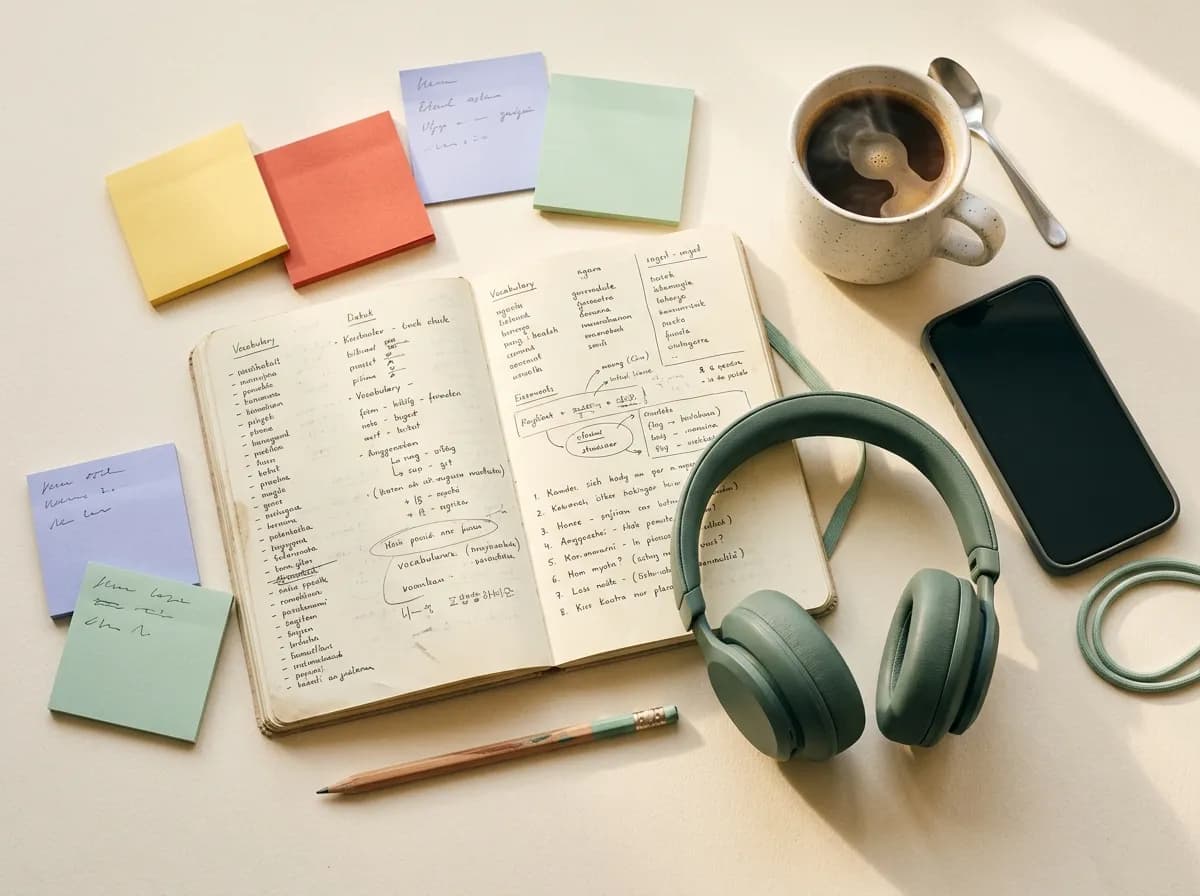
You can learn the basics of a language in 3 months, but not reach fluency on a normal schedule. Thirteen weeks at 10 hours a week gives you 130 hours, past Cambridge's A1 estimate and short of A2. Even 25 hours a week adds up to 325 hours, just under the 350 where B1 starts.
Reaching B2 in those 13 weeks would take about 38 to 46 hours a week, which is a second full-time job. So when a course promises fluency in 90 days, ask what it means by fluent. A short deadline is still worth setting: three months of speaking practice before a trip or a move changes what you can do at the airport or the rental office, even at A2.
How long does it take to become fluent in a language?
Becoming fluent in a language takes roughly 500 to 800 guided hours on Cambridge's scale, if fluent means B2 or C1. Fluent is not a level on the CEFR, so the word moves with the speaker. Cambridge's own short descriptions use it for three levels: "some fluency" at B2, "fluently and flexibly" at C1, "very fluently" at C2.
Pick the definition that matches your reason for learning. For chatting with your partner's family, B2 is plenty. For negotiating a contract, aim for the FSI's professional level. Start from where you are: the two-minute level quiz gives you a CEFR estimate, and counting from your own level cuts the hours you have left.
What makes learning a language faster or slower?
Regular speaking and well-spaced sessions are the two levers you control, while your starting point and the language itself are fixed. We found no reliable study that says a tutor, a class or an app gets you there in a set number of hours, so be wary of any page quoting one.
Spacing has good evidence for vocabulary. In a 2025 replication published in Studies in Second Language Acquisition, Rogers, Nakata and Chiu had 162 learners study 40 Swahili-English word pairs online; those who split practice across sessions beat those who did it all at once. That study covers word memory, not speaking, but it supports five short sessions over one long Sunday.
These factors change your personal number:
- The distance between the language and the ones you already speak
- The target level, and whether you need to speak, read or both
- How many of your weekly hours include producing sentences out loud
- Whether you actually keep the schedule for a whole year, holidays included
My own numbers show how slowly hours add up. I'm learning English at B1, aiming for B2+, with 3 hours of Preply lessons a week. Cambridge's gap between B1 and B2 is about 150 to 200 hours, so lessons alone would cover it in 50 to 67 weeks. Outside lessons, I practise out loud with ChatGPT's voice mode in the morning traffic.
How many tutor lessons a week do you need to learn a language?
One weekly tutor lesson is enough to keep speaking practice alive, but it gives you only about 43 hours a year. That is a small share of the hours in the tables above, so a tutor works best as the part of your week where you talk and get corrected, while apps, reading and listening fill the rest.
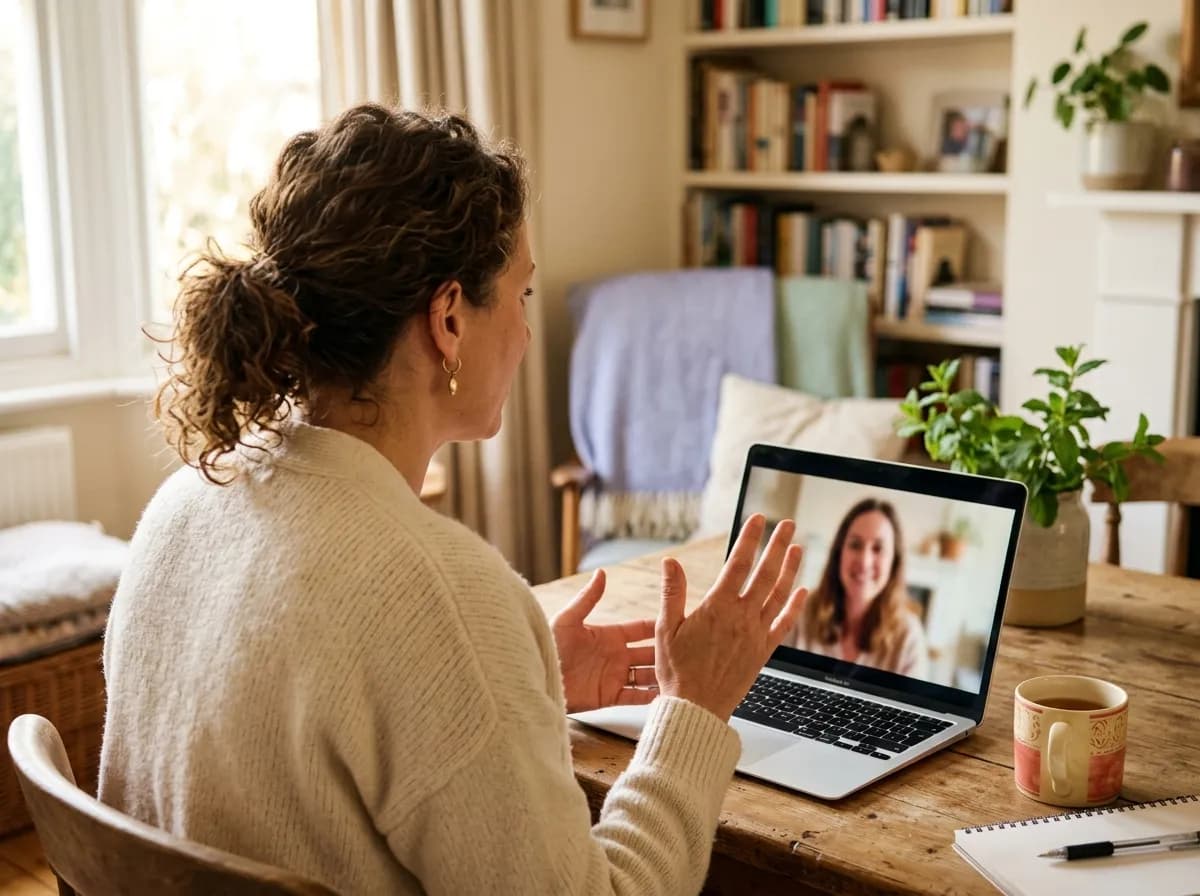
The cost is real. On Preply, the minimum plan is 4 lessons every 28 days, and lessons you haven't scheduled before renewal expire. At Preply's $27 average for native Spanish tutors, one lesson a week comes to about $1,404 a year before fees; our breakdown of Preply prices has the figures by language.
Skip a tutor for now if you can't protect one weekly slot, or if you only want to test a language for a month. A free app does that job. Book one when you have something specific to say: an interview, an exam, a family dinner. Our take on Preply for complete beginners covers what to ask for in that first lesson.
How to estimate your own language learning timeline
You can estimate your own language learning timeline in about ten minutes, using your real weekly hours and a target level. The result is a planning figure rather than a promise, so check it against your progress every few months.
- Choose a target level for a reason you can name, such as B1 for a trip or B2 for work.
- Take the Cambridge hours for that level, and subtract the hours for the level you already have.
- If the language is Korean or Japanese, start from the FSI figures instead, since Cambridge's will run short.
- Log your study hours for two weeks and use that real number, not the one you hope for.
- Divide the hours by your weekly number, then retest your level every 100 hours or so and correct the date.
Questions people ask about language learning timelines
What is the fastest language to learn for English speakers?
Italian and Portuguese have the shortest timelines among the languages we checked, at 24 weeks and 600 class hours on the FSI's archived list. Spanish and French sit in the same group at 30 weeks and 750 hours. Those figures assume full-time classes and a professional target, so they rank languages better than they predict your own calendar.
How long does it take to learn a language to a conversational level?
Plan on 16 to 18 months at 5 hours a week if conversational means B1, which Cambridge puts at 350 to 400 guided hours for English. Simple exchanges on routine matters (A2) take about 180 to 200 hours, or 8 to 9 months at the same pace. Harder languages will take longer.
Is 30 minutes a day enough to learn a language?
Thirty minutes a day is enough for slow, steady progress: it adds up to 3.5 hours a week. On Cambridge's figures, B1 would take about 100 to 114 weeks, roughly two years. Daily practice keeps words fresh, but add some speaking with a person, or those 30 minutes won't teach you to answer a question.
Can you learn a language in a year?
You can reach about B2 in a year with 10 hours a week, because that adds up to 520 hours and Cambridge's estimate for B2 in English starts at 500. At 5 hours a week, a year gives you 260 hours, which lands between A2 and B1. Korean or Japanese will need much more.
Are FSI hours the same as study hours?
FSI hours are class hours, so they leave out homework. A newer version of the FSI page, quoted on the LingQ forum in October 2025, describes a typical week as 23 hours in class and 17 hours of self-study. If that quote is accurate, the real workload is well above the class-hour totals most guides repeat.
How many hours does it take to reach B2 in a language?
Cambridge estimates about 500 to 600 guided learning hours to reach B2 in English, counting lessons and tasks set by a teacher. Treat that range as a baseline for other languages, not a measurement. Cambridge says learners vary, and no comparable table covers every language on this site.
- US Department of State, Foreign Service Institute: foreign language training (archived copy, UNT Web Archive)
- Cambridge University Press (2013): Introductory Guide to the CEFR for English Language Teachers
- LingQ forum (October 2025): post quoting a revised FSI table
- Rogers, Nakata and Chiu (2025), Studies in Second Language Acquisition: spaced practice replication
- Preply Help Center: how does my Preply subscription work? (checked November 2026)